

1.Product Definition
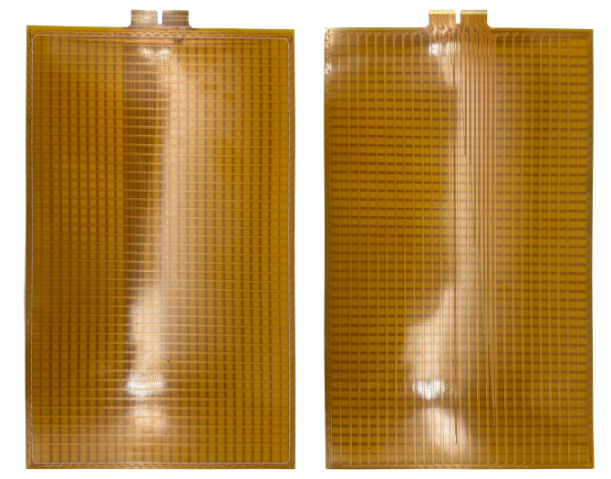
The flexible antenna coil circuit board of the electromagnetic screen is the core component of the electromagnetic touch module (EMR) - the antenna board. Handwriting input accuracy, sensitivity, and application scenario adaptability are the key design directions of antenna boards.
The antenna board captures the changes in the weak magnetic field emitted by the electromagnetic pen through a densely arranged array of electromagnetic induction coils (horizontal/vertical bidirectional layout) to achieve a coordinate accuracy of 0.012mm (equivalent to 1/6 of the diameter of a human hair). There is no breakpoint or jitter in the handwriting trajectory, that is, sub-millimeter resolution, to achieve high-precision positioning; The change of the magnetic field strength received by the coil has a linear relationship with the nib pressure, and with the control board algorithm, it can analyze 16,384 levels of pressure sensitivity, accurately simulate the effects of brush frustration and pen flying, that is, dynamic pressure sensitivity support, and realize pressure sensitivity restoration ; The flexible board can be laminated with a curved surface, the rigid board can ensure the size of the board to increase or decrease, and the transparent board can be adapted to the OLED screen to achieve million-level contrast display, as well as transparency and optical optimization.
2, product characteristics
Polyimide (PI) or transparent PET substrate is used, with a thickness of ≤0.1mm, and curved screen embedding is supported;
The coil layer is covered with a metal grid to block external electromagnetic noise such as liquid crystal drive circuits and WiFi, and the signal-to-noise ratio is increased by 40%.
It meets the requirements of high-precision positioning and pressure inductance reduction, and the production and manufacturing performance of flexible antennas is consistent and the yield is high.
3. Product technical support
The coordinate data is obtained through the energy interaction between the electromagnetic pen and the induction plate, and the pressure of the pen tip is converted into an electrical signal through a variable capacitance to achieve pressure sensitivity control.
Up to 16,384 levels of pressure sensitivity and 5080 LPI (lines per inch) resolution for precise handwriting thickness reproduction
Featured Material Technologies:
The dielectric constant is relatively stable, the size expansion and contraction coefficient is small, the transmittance of PET is 85%, and the transmittance of PI is 92%.
Featured process technology:
The line width and line spacing can be controlled;
Componentization Technology:
R\C device circuit simulation control (design and manufacturing);
Analog control of pressure sensing circuits (design and manufacturing);
Oscillation circuit simulation control (design and manufacturing);
4., the product manufacturing process
Double-sided FCCL+ covering film cutting, CNC drilling, black hole, electroplating, pattern transfer, exposure and development etching, lamination, pressing, testing, etc.;
5., the core QC process
Hole thickness control, line defect testing, LC circuit performance testing
6. Product test report
"Electromagnetic Induction Coil LCR Performance Test Report"
7. Directly under the product: handwriting touch module
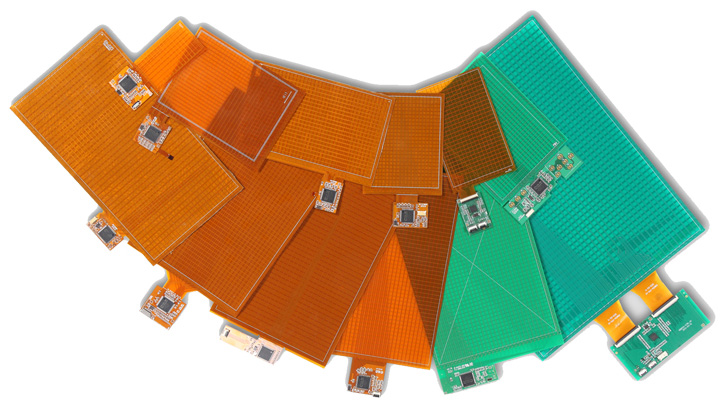
The handwriting touch module is a hardware component based on electromagnetic induction (EMR) or capacitive technology, which is mainly used to realize high-precision handwriting input, electronic signing, painting and other functions.
Its core technology is to convert analog writing into a digital signal by sensing the touch position, pressure and trajectory of the pen or finger.
8. The product ultimately belongs:
Government affairs/finance: electronic signature and approval screens, banking terminals, intelligent self-service terminals, etc., touch all-in-one machines, etc.;
Commercial scenarios: POS signature pads, conference touch terminals, bank signature pads;
Medical: electronic medical record signing, surgical information form;
Education: smart blackboard, electronic whiteboard, digital calligraphy desk, hand-drawn board, etc.;
Consumer electronics: drawing tablets, smart electronic notepads, tablet touch computers, etc.;
Industrial design: 100 inches or more large screen interactive system.
The following graphic content is a basic description of the drawing board.
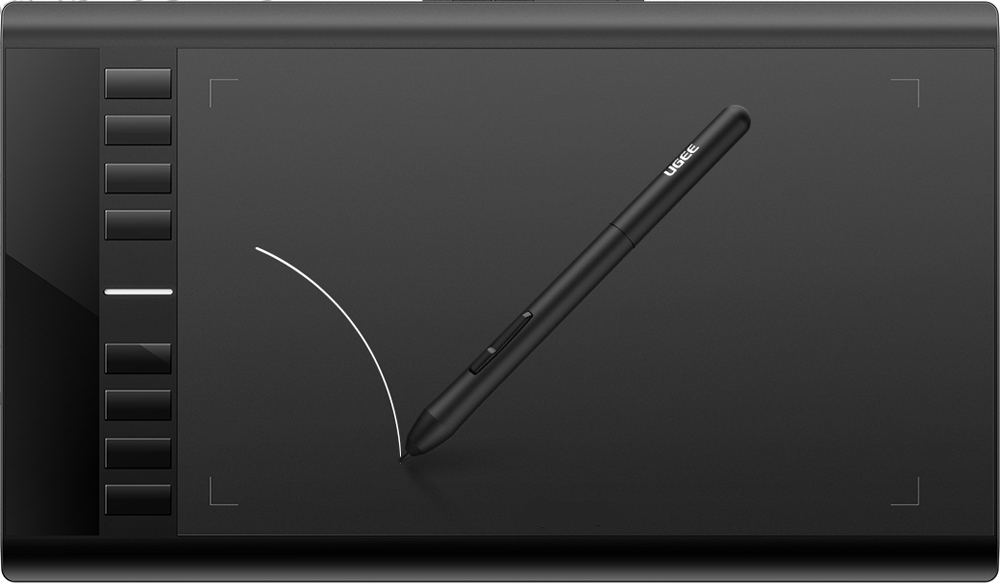
Drawing tablet, also known as drawing tablet, pen tablet, hand-drawn tablet, etc., is a kind of computer input device, usually composed of a board and a pressure sensitive pen, it is similar to the handwriting tablet and other unconventional input products, are aimed at a certain user group.
Used as a painting creation, just like a painter's drawing board and brush, the realistic pictures and lifelike characters that we commonly see in animated movies are drawn with one stroke through a pen tablet.
This drawing function of a pen tablet is something that keyboards and tablets can't match.
The pen tablet is mainly for teachers and students majoring in design and art, advertising agencies and design studios, and vector animation makers.
Product stack structure (figure):
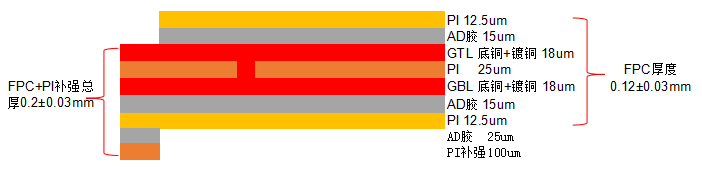
Product pore: minimum metallized pore size: (0.2±0.075);
Minimum non-metallized pore size: None
Product line: minimum line width: 0.12±0.02mm
minimum line spacing: 0.07±0.02mm
Product Solder Mask & Character: Solder Mask Window 2.47±0.1mm Character Silk Screen Line Width: 0.13mm
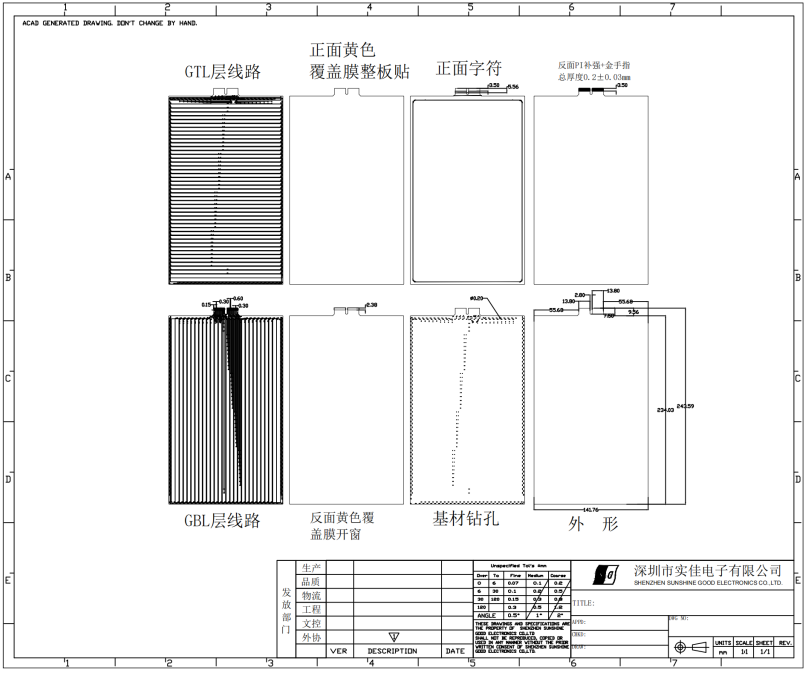
Finished product related size: 243.59*141.76mm
Surface process: immersion gold 1-2U".
Defect Testing:
Spot test of hole thickness in specific positions, AOI test of line defects
Functional Testing:
Circuit & hole open short circuit test
Componentization Test (Functional Circuit Performance Test):
"Electromagnetic Induction Coil LCR Performance Test Report"
Reliability Testing:
Thermal shock test, tin test, reinforcing peel strength test
Pre-testing of product-related certifications:Not yet
Product monomer drawing:
Prev: 没有了
 Download